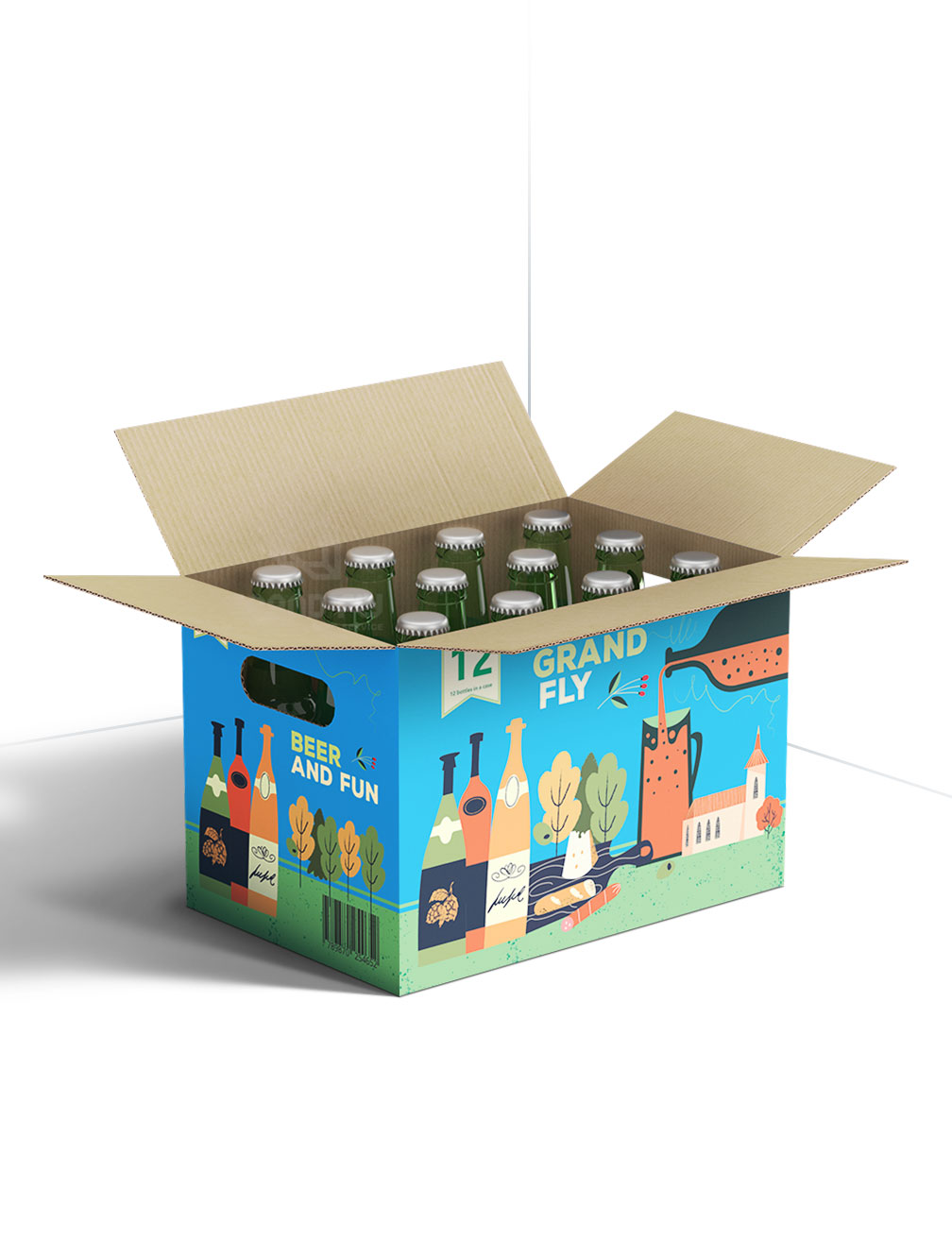
Rigid Box vs. Corrugated Box: How to Choose?

Two of the most popular packaging types – rigid boxes and corrugated boxes – serve very different purposes. One signals luxury and permanence; the other prioritizes protection and logistics efficiency. Choosing between them depends on your product, budget, and brand message. In this guide, we break down the key differences and help you make the right decision.

What is a rigid box?

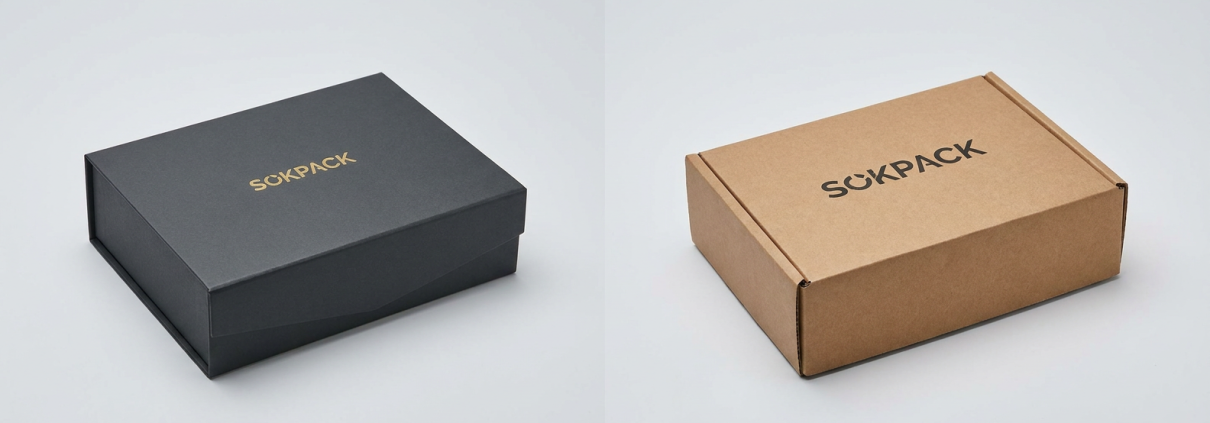
A rigid box (also called a setup box) is made from high‑density paperboard that is 1.5mm to 3mm thick. The board is wrapped with printed or decorated paper (or fabric) and assembled into a fixed shape. Rigid boxes do not fold flat.

Pros:

  • Extremely sturdy and crush‑resistant
  • Creates a luxury unboxing experience
  • Supports intricate finishes: foil stamping, embossing, soft‑touch lamination
  • Can be designed with magnetic closures, ribbon pulls, and inner trays

Cons:

  • Higher cost (material + manual assembly)
  • Higher shipping volume (shipped pre‑assembled)
  • Not suitable for heavy industrial or bulk shipping

Typical applications:

  • Jewelry, watches, high‑end cosmetics
  • Smartphones, headphones, luxury electronics
  • Perfume, chocolate, wine gift sets

What is a corrugated box?

Corrugated boxes are made from fluted paperboard (single‑wall, double‑wall, or triple‑wall) with liners on both sides. The flutes provide cushioning and stacking strength.

Pros:

  • Excellent impact protection

  • Lightweight and cost‑effective

  • Flat‑pack for efficient storage and shipping

  • Recyclable and often made from recycled content

Cons:

  • Less premium appearance (though can be printed)

  • Less structural rigidity under point pressure

  • Not ideal for high‑end retail presentation without a sleeve or outer wrap

Typical applications:

  • E‑commerce shipping (Amazon‑ready)

  • Moving boxes, warehouse storage

  • Large or heavy products (appliances, furniture, industrial parts)

Side‑by‑side comparison


FeatureRigid BoxCorrugated Box
Material thickness1.5–3 mm solid board2–8 mm fluted board
Protection levelHigh (crush resistance)Very high (impact absorption)
Premium feelExcellentLow to medium
Printing qualityHigh (offset, wide color gamut)Good (flexo or digital)
Shipping efficiencyLow (pre‑assembled)High (flat‑pack)
Cost per unitHighLow to medium
Typical MOQ (SOKPACK)From 100 pcsFrom 200 pcs

Can you combine both?

Yes. Many brands use a corrugated shipping box as the outer e‑commerce mailer, and inside, a rigid box for the product presentation. This gives you the logistics efficiency of corrugated with the unboxing luxury of rigid.

Which one should you choose?

  • Choose Rigid Box if: your product is premium, you want a memorable gift‑like opening, and your budget allows higher per‑unit cost.
  • Choose Corrugated Box if: you need low‑cost, high‑volume shipping protection, or your product is heavy/large.

Still unsure? SOKPACK provides free consultation to evaluate your product and recommend the most suitable material and structure. Request a sample pack today.

What Packaging Structure Is Right for Your Product?

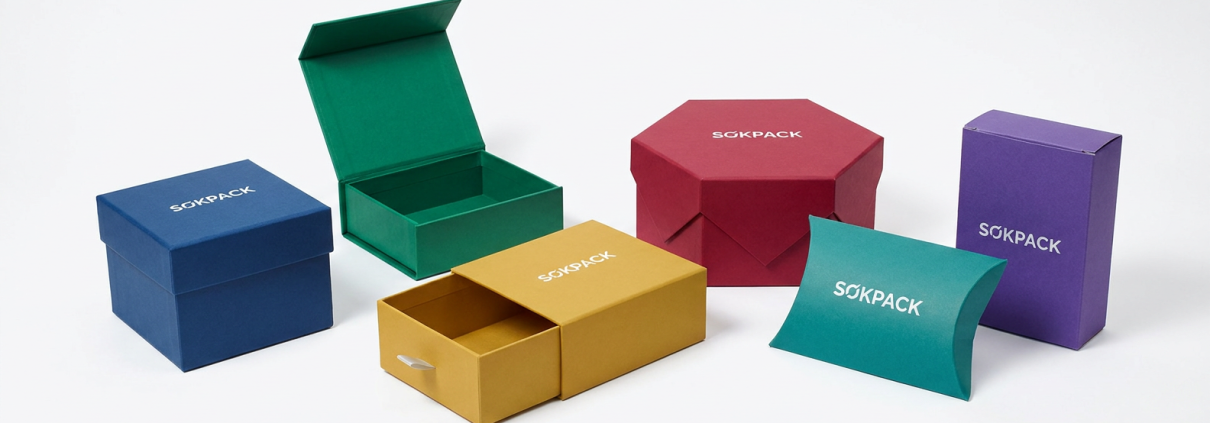
Choosing the right packaging structure is more than just aesthetics. The structure determines how well your product is protected, how cost‑efficient your supply chain becomes, and how your brand is perceived at the point of sale. At SOKPACK, we help brands match their products with the ideal packaging format. Below are the most common structures and their best‑use scenarios.

1. Straight Tuck Box (End Tuck / Side Tuck)

A classic folding carton where the lid tucks into the opposite end. It’s lightweight, flat‑ships, and is very cost‑effective.

Best for:

  • Small consumer goods (soap bars, supplements, phone cases)
  • Products that don’t require heavy protection
  • Brands looking for minimal packaging with high print area

2. Rigid Box (Setup Box)

Made from thick paperboard wrapped around a rigid core. Rigid boxes do not fold flat – they are shipped pre‑assembled and offer superior crush resistance and a premium unboxing experience.

Best for:

  • Luxury goods (jewelry, watches, high‑end cosmetics)
  • Electronics (headphones, smart devices)
  • Gift sets and limited editions

3. Drawer Box (Slide Box)

A two‑piece structure: an outer sleeve and an inner tray that slides out. Often enhanced with ribbon pulls, magnetic closures, or PVC windows.

Best for:

  • Products meant to be displayed (perfume, candles, scarves)
  • Packaging that doubles as a storage box
  • Brands that want a memorable pull‑to‑open gesture

4. Corrugated Box

Multi‑layer fluted board provides excellent cushioning. Corrugated boxes can be plain for shipping or printed for retail shelves (shelf‑ready packaging).

Best for:

  • E‑commerce shipping (reducing damage)
  • Heavy or bulky items (bottles, machinery parts)
  • Retail displays where stacking strength matters

5. Magnetic Closure Box

A rigid box with magnets embedded in the lid and base. It closes with a satisfying click and holds its shape even after repeated opening.

Best for:

  • Premium product launches
  • Cosmetics and skincare sets
  • Gift boxes that will be kept and reused

6. Tuck Top with Auto Bottom

A one‑piece folding carton that locks into shape automatically. It sets up quickly and is very durable for its weight.

Best for:

  • Takeaway food, bakery items
  • Hardware and tools
  • Any product that needs fast assembly and good stacking strength

How to decide? Ask these 3 questions:

  1. What is your product’s weight and fragility? – Heavy or fragile items need rigid or corrugated structures.
  2. What is your brand positioning? – Luxury demands rigid boxes with magnetic or drawer openings.
  3. What are your shipping and storage constraints? – Folding cartons and corrugated boxes save space; rigid boxes take more warehouse room.

At SOKPACK, we offer structural design support and 3D prototyping to help you test different structures before mass production. Contact us to get a recommendation based on your exact product.

How Custom Packaging Is Produced – A Complete Step-by-Step Guide

Whether you’re launching a new product, upgrading your brand image, or preparing a seasonal gift set, custom packaging is essential. But what exactly happens from the moment you approve a design to the day boxes arrive at your door? If you’ve never managed a custom packaging project, the process can seem complex.

At SOKPACK, we believe in transparency, control, and efficiency. Below, we break down the complete custom packaging production workflow so you know exactly what to expect at every stage.

Step 1: Team Collaboration & Needs Assessment

Great packaging starts with great communication. When you contact SOKPACK, our project engineers and sales team systematically learn about your brand story, target audience, budget, and product protection requirements. You don’t need technical packaging knowledge – simply tell us:

  • What product you’re packaging (size, weight, fragility)

  • The desired look and feel (luxury, eco-friendly, minimalist, etc.)

  • Any compliance needs (FSC™ certification, BSCI, etc.)

Why this matters: 59% of consumers say they would switch suppliers if their current one fails to meet sustainability standards within the next three years. That’s why we clarify material direction early.

Step 2: Concept Design & Structural Development

Once requirements are clear, our structural engineers and graphic designers work simultaneously:

  • Structural Design – Based on product dimensions and weight, we create the most suitable box style (drawer box, flip-top box, magnetic box, etc.) and draw a precise dieline. The dieline is the “cutting blueprint” that defines where the board is cut, folded, and glued.

  • Visual Design – We incorporate your brand identity, color scheme, logo placement, and decorative finishes like foil stamping, embossing, or spot UV.

At this stage, we typically provide 3D renderings so you can “see” the final packaging before any material is cut.

Step 3: Sampling & Approval

Before mass production, we create physical samples for your review. This is a critical step – you can:

  • Feel the paper texture and thickness

  • Test how smoothly the box opens and closes

  • Verify print colors match your expectations

  • Check how well the inner tray (EVA foam, velvet, or molded pulp) secures your product

Only after you fully approve the sample and sign off does the project move to production. SOKPACK supports low MOQ (Minimum Order Quantity) starting from 100 units – ideal for startups, limited editions, and market testing.

Step 4: Material & Finish Selection

Packaging performance and sustainability largely depend on material choices. At SOKPACK, we offer a wide range of paperboard options:

MaterialPropertiesBest For
Rigid PaperboardHigh stiffness, premium feelLuxury gift boxes, electronics
Corrugated BoardMulti-layer, excellent cushioningE-commerce shipping, heavier products
Kraft PaperNatural, eco-friendly lookSustainable packaging, 100% recycled options

For coatings and lamination, common choices include:

  • Matte Lamination – Smooth, non-reflective finish; elegant and subtle

  • Gloss Lamination – Vibrant, high-shine finish; makes colors pop

  • Soft-Touch Coating – Velvety feel; premium for cosmetics and luxury goods

We also support eco-friendly decorative finishes such as water-based coatings, soy-based inks, and FSC™-certified virgin or recycled fibers.

Step 5: Printing & Surface Finishing

The visual appeal of custom packaging depends on print quality and decorative finishes. SOKPACK primarily uses offset printing – the most common method for custom packaging, offering high color accuracy and precision for large runs, CMYK images, or brand spot colors.

After printing, we apply surface treatments based on your design:

FinishEffectBest Use
Hot Foil StampingMetallic gold, silver, or other colorsLogos, luxury brands, holiday packaging
Embossing / DebossingRaised or recessed reliefTactile brand emphasis, premium texture
Spot UVHigh-gloss coating on specific areasContrast effect, highlighting logos or graphics

Step 6: Die-Cutting & Box Assembly

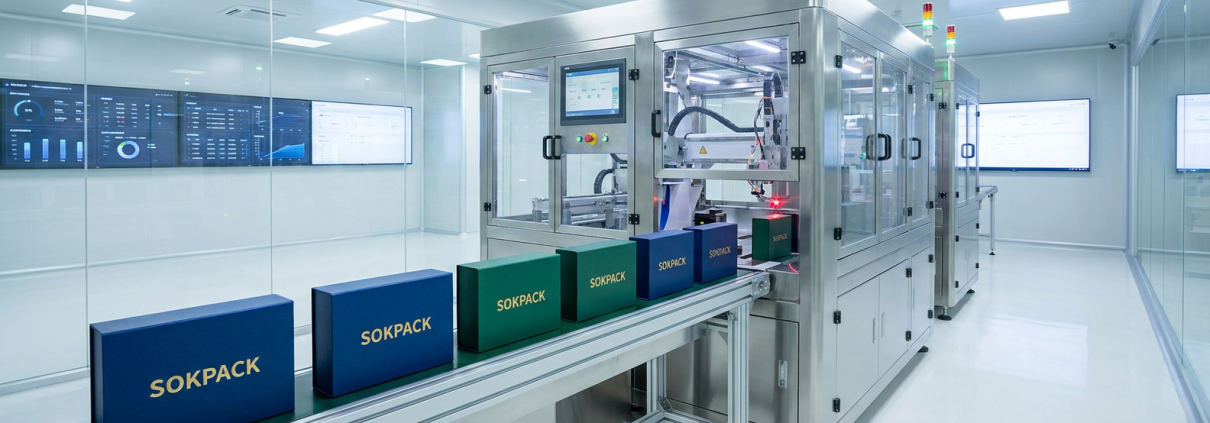
Once printing and finishing are complete, the printed sheets go into a die-cutting machine. Using the pre-made cutting die, the machine applies pressure to cut the board into the box’s flat structure. The quality of the die directly determines edge smoothness and folding accuracy.

After cutting, workers fold the flat pieces along scored lines, and machines apply adhesive to glue panels together into 3D boxes. For complex structures like drawer boxes or magnetic boxes, this step also includes installing magnets, ribbon pulls, or inner trays.

Step 7: Quality Inspection & Shipping

Every single box must pass SOKPACK’s internal quality standards before leaving our factory. Our inspection checklist includes:

  • Print color consistency compared to the approved sample

  • Smooth die-cut edges with no burrs or rough spots

  • Secure glue seams without excess adhesive

  • Tight fit between inner tray and product

  • Proper magnet strength and smooth opening/closing

Only fully compliant products are packed, protected, and shipped worldwide.

Sustainability & Certifications – The Future of Packaging

The global sustainable packaging market exceeded $399.8 billion USD in 2025 and continues to grow at over 10% annually. This is driven not only by regulations but also by rising consumer awareness.

To help you meet your sustainability goals, SOKPACK offers the following certifications and eco-friendly solutions:

CertificationMeaningBest For
FSC™Fibers come from responsibly managed forestsLuxury brands, EU/US exports, credible green claims
BSCISupply chain social responsibility and labor rightsInternational retailers, large-format store compliance
ISO 9001International quality management systemClients requiring high consistency and quality control
100% RecyclablePackaging can fully enter existing paper recycling streamsE-commerce, retail brands, sustainability reports

Working with a certified packaging partner means your brand can confidently use these trust marks in your marketing and communicate authentic sustainability commitments to consumers.

Low Minimum Order Quantities (MOQ) – Tailored for You

For years, small and medium-sized brands and startups have faced a common problem: high-quality custom packaging often requires huge minimum orders, leading to cash flow pressure and inventory waste. SOKPACK understands this challenge.

Within our production system, we support low MOQs starting from 100 to 1,000 units – no need to order thousands of boxes at once. We work flexibly based on your actual sales rhythm, helping you reduce overproduction and inventory pressure.

Whether you’re launching a new product, preparing a limited-edition holiday box, or updating your product line, we have short-lead, low-batch production solutions that make your packaging budget work harder.

Conclusion

Custom packaging production is a systematic and precise process involving structural design, sampling, material selection, printing, die-cutting, assembly, quality control, and logistics. Choosing a packaging partner like SOKPACK – with end-to-end process control – gives you seamless support from design to delivery, significantly reducing communication costs and project risks.

If you’re looking for high-quality custom packaging for your products, browse our product collection or contact our packaging consultants directly. We’re ready to turn your brand story into stunning packaging.


Further Reading:

  • What Packaging Structure Is Right for Your Product?

  • Rigid Box vs. Corrugated Box: How to Choose?

  • Packaging Surface Finishes Explained: Foil Stamping, Embossing, UV, Lamination